
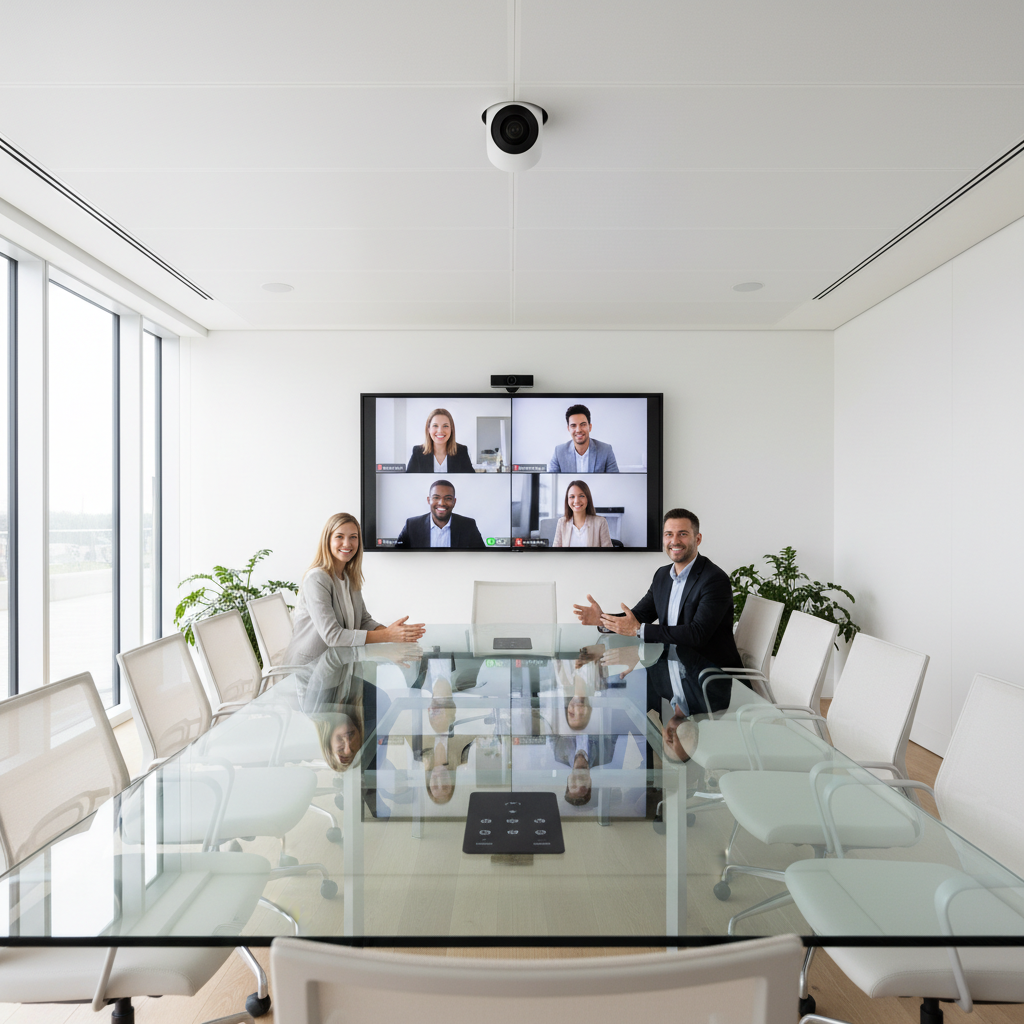
Hybrid meetings are now a baseline expectation in UK workplaces, and the rooms that host them need to work every time. Yet recent UK research shows that 73% of workers still report technical issues such as poor audio, video or connectivity, and employees lose nearly six minutes at the start of each hybrid meeting. Those minutes add up across a week, a team and a whole organisation. The most effective response is to build hybrid meeting rooms around integrated AV technology, where displays, microphones, speakers, cameras and control work together as one system. A well-planned room lets people join, present and collaborate in seconds, so remote colleagues receive the same experience as those sitting in the room. This approach is often called meeting equity, and it is quickly becoming a measure of workplace quality. For facilities teams, IT managers and designers, the goal is to remove friction rather than add features for their own sake.
Table of Contents
Why integrated AV technology matters for hybrid meeting rooms
Many offices have grown their meeting spaces one device at a time, which often leaves them with mismatched equipment and inconsistent user experiences. Integrated AV technology replaces that patchwork with a cohesive setup, managed centrally and designed around how people actually use the room. Whether the space is a huddle room, boardroom, training suite or divisible multi-purpose area, the same principle applies: simple for the user, dependable for IT. Platform-native tools are a large part of this shift, with Microsoft Teams Rooms and Zoom Rooms now anchoring many UK deployments. Features such as one-touch join, calendar integration and room scheduling help staff start meetings without troubleshooting. Wired and wireless BYOD options also let visitors share content without hunting for adaptors. Together, these elements cut the start-up delay that frustrates so many teams.
Start with audio, then build around it
Remote participants often judge a meeting by what they hear before anything else, so audio should be the first design decision. Clear speech pickup, well-placed ceiling microphones and speakers suited to the room size make conversation feel natural for everyone. Larger rooms usually benefit from digital signal processing and professional tuning to manage echo and background noise. Cameras come next, with intelligent framing or PTZ options helping remote attendees see who is speaking. Displays or projection should then be sized so that in-room participants can see shared content comfortably. Finally, a simple touch panel or control interface ties everything together for non-technical users. Getting the order right prevents expensive rework later and keeps the focus on communication rather than equipment.
Features of a smarter UK meeting room
Businesses are investing accordingly, with upgraded meeting room equipment, extra IT support and AI tools among the leading office changes reported for 2025. Standardising on a consistent set of components also makes support easier, since staff meet the same interface in every room. Planning for scale from the outset helps organisations extend the same quality to town halls, digital signage and wider workplace communication.
Choosing the right partner makes the difference between a room that looks impressive and one that performs reliably. Manufacturers with a broad ecosystem of control, business audio, loudspeakers and conferencing products can help UK organisations design spaces that stay consistent across sites, and local European support keeps deployments running smoothly. Teams exploring options can learn more at www.biampeurope.com, where audio, video and control solutions for modern workplaces are presented in one place. With the right planning, hybrid meeting rooms can move from a daily frustration to a dependable part of how UK businesses collaborate.